Punks @ La Rochelle

6 min read. Film Punks head to La Rochelle for classic Hollywood, German Expressionism, Jacques Tati, contemporary discoveries and an essential dose of French cinema.

Punks @ La Rochelle

La Rochelle has always been a salty, rebellious port city. Naturally, we headed there for the 54th edition of the Fema film festival to unwind.
La Rochelle harbour decorated for Festival La Rochelle Cinéma
Festival flags, sea air and a very full screening schedule.

The Festival La Rochelle Cinéma was founded in 1973 by the critic, historian and programmer Jean-Loup Passek.

Unlike many other film festivals, Fema remains proudly non-competitive. It is fully dedicated to bridging film history with contemporary cinema, without prizes, juries or the usual red-carpet hierarchy.

Its audience is made up of “those wonderful people out there in the dark” that Norma Desmond seeks to leave in awe.

Film Punks professional accreditation for Festival La Rochelle Cinéma
Officially accredited. Not a bad way to spend a few days.
Film Punks Journal

In through the front door.

A professional pass, an overambitious programme and far more films than anyone could reasonably watch in one visit.

Opening presentation at the 54th Festival La Rochelle Cinéma
Welcome to the 54th Festival La Rochelle Cinéma.

Old Hollywood, back on the big screen.

Our first stop was Billy Wilder’s 1950 noir classic, Sunset Boulevard.

Enough has already been written in praise of the film, but it remains a near-perfect demonstration of what cinema can achieve. From its enticing story and witty dialogue to its layered performances, watching it on the big screen was an unmissable opportunity.

Some films do not need rediscovering. They simply need to be seen properly.
Cinema audience reflected in a grand piano at Festival La Rochelle Cinéma
Those wonderful people out there in the dark.

Further back. All the way to silence.

After leaving Classical Hollywood behind, we travelled further back in time to a screening of Faust, accompanied by a live concert.

It is a true gem of German Expressionism, with astonishing camerawork that left us guessing how certain shots had been achieved in the 1920s.

Silent film screening accompanied by a live orchestra
Silent cinema accompanied by live music.

Summertime with Jacques Tati.

To lighten the mood, and because it was summertime, the festival offered a retrospective of Jacques Tati’s filmography.

His film Playtime delivers a sophisticated aesthetic filled with visual gags, architectural precision and carefully choreographed chaos. It is easy to see how Tati’s constructed worlds would later influence filmmakers such as Wes Anderson.

A full cinema audience at Festival La Rochelle Cinéma
Cinema as a collective experience.
A packed red-seat auditorium during a festival screening
Packed screenings and plenty to discuss afterwards.
A sunlit square in La Rochelle
A little daylight between screenings.

First films and emerging voices.

There was also room for first features, including A Swedish Love Story by Roy Andersson, a filmmaker who has successfully navigated the worlds of cinema and advertising.

His 1970 debut reveals a completely different style and voice from his more recent work. It is less absurdist, more emotionally direct and built around a more linear narrative.

Nonetheless, the quality of this earnest Nordic coming-of-age drama remains unshaken.

Festival discovery

A filmmaker’s first feature can reveal a completely different voice from the one they later become known for.

From film history to Cannes 2026.

We sailed away from older waters and dipped our feet into new ones.

Andrey Zvyagintsev presented Minotaur, which was awarded the Grand Prix at Cannes in 2026.

The film reworks Claude Chabrol’s La Femme infidèle, transposing the story to Russia in 2022. The war unfolds in the background while the country’s wealthy elite appear insulated from its immediate consequences.

Notre Salut (A Man of His Time), a French-Belgian production, earned Emmanuel Marre the Best Screenplay award at Cannes that same year.

Inspired by the life of the director’s own great-grandfather, it tells the story of a morally compromised administrator within Vichy France. Its documentary-inflected approach disrupts the conventions of the historical period piece and forces the audience into a more immediate, destabilising relationship with the story.

01
Minotaur Andrey Zvyagintsev’s politically charged reworking of Chabrol, set against Russia’s 2022 invasion of Ukraine.
02
Notre Salut Emmanuel Marre’s troubling study of bureaucracy, collaboration and moral compromise under the Vichy regime.
Notre Salut screening and filmmaker discussion at Festival La Rochelle Cinéma
Notre Salut, followed by a conversation with the filmmakers.

We had the opportunity to hear from both directors during Q&A sessions, giving us a glimpse into their creative processes and the hurdles inherent to filmmaking.

Those hurdles extended beyond production itself, given the controversial historical and political territory both stories explore.

A final dose of existentialism.

When in France, we could not leave without some existentialism.

Our cinematic Rochelaise attendance concluded with No Country for Old Men, screened as part of the festival’s Javier Bardem retrospective.

The Coen brothers’ masterful adaptation of Cormac McCarthy’s novel is hardly a hidden gem. It cemented Bardem on the international stage and further confirmed the Coens’ stature as two of modern cinema’s most distinctive filmmakers.

Film history beside new discoveries. That is where a festival becomes more than a programme.
The historic harbour and towers of La Rochelle
La Rochelle’s old harbour, with the festival never far away.

Fed in every sense.

La Rochelle was a nourishing experience filled with galettes, crêpes, cider and great films.

When to Punk. And when not to.

6 min read. AI can generate almost anything, but that is exactly why real production craft, trust and human judgement are becoming more valuable.

When To Punk. And When Not To.

There’s a strange thing happening in production right now. At the exact moment AI can generate almost anything, reality has started becoming more valuable.

Not less. More.

For years, production chased perfection. Cleaner edits. Smoother grading. More polish. More control. Then AI arrived and made perfection cheap.

Need a cinematic mountain shot? Done.
Need a flawless model? Done.
Need a product floating through a hyper realistic dreamscape? Done in thirty seconds.

And honestly, some of it is incredible.

We’re not anti AI at Film Punks. That would be stupid. AI is already reshaping production, post, ideation, scripting, storyboarding, VFX, localisation and content adaptation. Anyone pretending otherwise is lying to themselves.

We use AI too.

In fact, here is a fun little spoof film we made with Porky Whites for April Fools' Day, taking the Savage ad and turning it into sausage, using AI voice, AI visuals and a fair bit of ridiculous thinking.

Porky Whites x Film Punks. AI spoof film made for April Fools' Day.

But here’s the thing.

Just because you can generate everything does not mean you should.

That’s where judgment matters.

That’s when to punk. And when not to.

The shift is emotional.

The real shift happening right now is not technological. It’s emotional.

Audiences are becoming more sensitive to what feels real, human and believable. Not because they suddenly hate technology, but because synthetic perfection quickly becomes wallpaper.

When everything can look perfect, perfection stops being interesting.

Trust starts mattering more. Texture matters more. Presence matters more. Craft matters more.

The trust problem.

And the data increasingly points in that direction.

13%of consumers completely trust AI generated content. Klaviyo 2026.
31%said visibly AI generated marketing made them trust brands less. Klaviyo 2026.
74%of people familiar with generative AI say it is making it harder to trust what they see online. Deloitte.

A global KPMG study found more than half of people worldwide remain unwilling to trust AI.

That matters for brands. A lot.

Because branding is ultimately a trust mechanism.

And trust is built through signals.

Real people.

Real reactions.

Real environments.

Imperfections.

Specificity.

Human judgement.

Craft becomes proof.

The irony is that AI may actually increase the value of great production craft rather than replace it.

Why? Because craft becomes proof.

A real performance feels different. A well observed documentary moment feels different. A beautifully shot real location carries emotional weight. An authentic interview has texture AI still struggles to replicate convincingly.

People may not consciously articulate it, but they feel it.

Sometimes AI is the smartest choice.

Use AI for

  • Rapid concept visualisation
  • Storyboarding
  • Versioning across markets
  • Speed, adaptation and scale
  • Impossible worlds
  • Visual experimentation on limited budgets

Use human craft for

  • Belief
  • Emotional connection
  • Cultural credibility
  • Trust
  • Performance
  • Judgement

But when the goal is belief, emotional connection, cultural credibility or trust, human craft becomes disproportionately important.

That’s when not to cut corners. That’s when to punk carefully.

Punk Take

Being a punk is not about rejecting technology. It’s about rejecting lazy thinking.

The danger right now is not AI itself. The danger is sameness. The brands using AI most, look the same. Homogeny is back. And it’s dangerous.

We’re entering an era of infinite content generation. Infinite assets. Infinite outputs. Infinite “good enough” and “that’s okay”.

Neither are okay.

And in a world flooded with synthetic content, audiences will increasingly gravitate toward work that feels intentional, observed and human.

Not polished for the sake of it.
Not fake cinematic gloss.
Not “AI slop”.

Real.

The future is hybrid.

AI will become part of the workflow. Of course it will. But the brands that win will be the ones who understand where automation helps and where humanity matters more.

The trick is knowing the difference.

That’s production now.

Not man versus machine.
Judgement versus automation.

Check out our new reel.

Film Punks reel.
Watch the reel

UK cinema from now to summer 2026

UK cinema from now to summer 2026, the big hitters, the sleepers, and the ones that sadly might faceplant. 4 min read.

Buckle up - the UK cinema slate from now through summer 2026 is insanely packed. From franchise tentpoles and animated mainstays to auteur pics and possible flops, here’s a shirt-and-punchy look at what matters (and what might not).

PS - What about Melania - lowest rated film on IMDB. Ever. Whoops.

🎥 EARLY 2026 - FEB–MAR: Big Openers + Hidden Gems

What’s exciting

Project Hail Mary
  • Project Hail Mary - Ryan Gosling leads this adaptation of the Andy Weir sci-fi hit. If theatres still crave smart space drama, this is it.
The Super Mario Galaxy Movie
  • The Super Mario Galaxy Movie (3 Apr) - Family animation with genuine box office pedigree; bright visuals and nostalgia.
Animal Friends
  • Animal Friends (1 May) - Ryan Reynolds & Jason Momoa in a noisy, fun ensemble. Easy crowd-pleaser if you’re in a light-hearted mood.

What’s… so-so

Scream 7
  • Scream 7 (27 Feb)- Expect familiarity, not reinvention. Franchise fatigue is real.
  • Romantic/arthouse candidates like The Love That Remains or A Private Life have niche pull — great on their terms, minimal wide-audience impact.

Undercards to watch

  • One Last Deal - Danny Dyer in a football-agent drama? This might be either unironically great or impressively grim.
  • Power Ballad - John Carney’s musical comedy potentially punching above its weight if the tunes stick.

☀️ SPRING → SUMMER 2026 — BLOCKBUSTERS DOMINATE

In the “I’ll be there opening night” category

The Devil Wears Prada 2
  • The Devil Wears Prada 2 (1 May) - A sequel decades in the making. Nostalgia plus Emily Blunt/Hathaway + Meryl? Studio insurance policy.
Mortal Kombat II
  • Mortal Kombat II (15 May) - If you loved the first, expect more visceral punch. Otherwise: average.
Star Wars: The Mandalorian and Grogu
  • Star Wars: The Mandalorian and Grogu (22 May) - Disney plays it safe with a fan-friendly series-to-film adaptation.
Toy Story 5
  • Toy Story 5 (19 Jun) - Biggest true family tentpole. Pixar rarely misses here.
Supergirl: Woman of Tomorrow
  • Supergirl: Woman of Tomorrow (26 Jun) - DC’s slate gets existential - could be the surprise of summer.

Summer punchouts + potential flops

  • The Odyssey (17 Jul) - Christopher Nolan always gets eyeballs, but this one risks feeling too… Nolan. Big, thoughtful - but not always crowd-comforting.
  • Spider-Man: Brand New Day (31 Jul) - Marvel fatigue is real; this needs innovation, not iteration.
  • Mega Minions / Moana (Live-Action) - Safe family dollars, low critical ambition.

📈 MID-SIZED & ARTISTIC

  • British indie releases and film festival darlings (The Bride, The Magic Faraway Tree) offer compelling alternatives if blockbusters aren’t your vibe.
  • Expect a modest awards buzz around The Drama with Zendaya and Pattinson (early April).

🧐 WHAT LOOKS DUBIOUS

Overcrowded release windows - May & June especially feel jammed, meaning hardcore films might get crushed by marketing noise.

Franchise fatigue rising - sequels and cinematic universe entries now vie for attention with little tonal differentiation, a ticket-buyer red flag.

Blockbuster risk vs reward - mid-tier action (like Mortal Kombat II) may not scale beyond core fans. The big winners will be:

  • Nostalgia (Toy Story, Devil Wears Prada 2)
  • Major franchises (Star Wars, Spider-Man)
  • Directors with audience trust (Nolan)

🎯 FINAL TAKE

If you’re planning cinema outings over the next six months in the UK:

🎟️ Must-See Big Screens

  • Toy Story 5, Project Hail Mary, Star Wars: The Mandalorian and Grogu, The Odyssey

🍿 Fun, Popcorn-Friendly

  • Animal Friends, Supergirl, Mortal Kombat II

🎨 Worth a Look for Grit or Art

  • Indie/arthouse fare, plus John Carney’s Power Ballad

💤 Proceed With Caution

  • Sequels that feel like churn (Scream 7, mid-rank horror or franchise filler)

On The Ground In Brussels

Film Punks partnered with Hedayah in Brussels to document the Hedayah International Research Conference 2025 with event film, interviews, photography, and same day social content.
Film Punks filming the Hedayah International Research Conference 2025 in Brussels

Hedayah Film Punks travelled to Brussels to document the Hedayah International Research Conference 2025 with event film, interviews, photography, and a same day social pipeline.

Brussels 2025

This year, our partnership with Hedayah took Film Punks across the Channel to Brussels, where we filmed and photographed the Hedayah International Research Conference 2025. Having collaborated with Hedayah throughout the year across conferences, animation projects, and social content we arrived on familiar ground, just with a few more trains, hotels, and Belgian chocolates in the mix.

Hedayah, an international organisation based in the UAE, focuses on countering extremism and violent extremism through research, capacity building, and support for governments and civil society. Working closely with their team over the past year has helped us understand how to produce content that genuinely supports their mission.

Setting The Stage

Before the event even began, we delivered a full pre event content package designed to build awareness across Hedayah’s social channels. Short form videos and designed assets helped set the tone for the conference and gave attendees a preview of what to expect.

The brief was to capture the scale and seriousness of the conversations while keeping the assets flexible: social first, but robust enough for internal comms and long term documentation of the research programme.

Objectives

  • Provide complete video, audio, and photography coverage across the three day conference.
  • Capture interviews with policymakers, government officials, researchers, and practitioners from around the world.
  • Deliver daily wrap up edits and highlight content while the event was still live.
  • Build a reusable content library aligned with Hedayah’s mission and existing visual language.

On The Ground In Brussels

Across the three day event, we interviewed policymakers, government officials, researchers, and practitioners working to prevent and counter extremism around the world. Our focus was on capturing their insights clearly and effectively, ensuring their contributions could be shared long after the conversations ended.

With an on site editing station and close coordination between our videography, editing, and AV teams, we provided full video and audio coverage of the conference. This setup allowed us to turn around daily wrap up videos, highlight reels, and same day photography, giving Hedayah the tools to communicate key moments and messages in real time.

Conference Film

The main conference film we delivered combines plenary sessions, interviews, and atmosphere into a single piece that can anchor Hedayah’s post event communications and sit as a record of the 2025 edition.

Stills From The Conference

Same day stills gave Hedayah a steady stream of assets for live updates, media requests, and archive use. Composition and grading were kept consistent so the new material would sit comfortably alongside existing work produced across the partnership.

“Our ongoing partnership with Hedayah has grown steadily over the past year. Working closely with their team across a range of projects has helped us understand how to best support their communications goals. This year’s conference was another strong collaboration, and the project wrapped with a result everyone was proud of.”

FILM PUNKS Production Partner to Hedayah

Outcomes

  • Three days of continuous event coverage across plenary, breakout, and informal spaces.
  • Daily wrap up edits, highlight reels, and same day photography delivered on site.
  • Interview library capturing a broad cross section of global practitioners and policymakers.
  • Content ready for immediate use and long term documentation of Hedayah’s research work.

Credits

Client : Hedayah

  • Organisation Hedayah – International Center of Excellence for Countering Violent Extremism
  • Event Hedayah International Research Conference 2025

Production : Film Punks

  • Production Film Punks
  • Services Event film, interviews, photography, on site edit, AV collaboration
  • Location Brussels, Belgium

AI vs Lo Fi: AI changed how we make content.

AI vs Lo Fi: Why The Machines Are Not Winning The War AI changed how we make content. It did not change what makes people care.

AI Changed Everything About Making

You can sit at a laptop and generate in seconds what used to take teams of editors, animators, colourists, sound designers, and post houses. The economics flipped. The speed is wild. The power is intoxicating.

And yet, in the race between AI, how it has always been done, or lo fi, it is the scrappy handheld human stuff and well made reality that keep winning hearts, minds, and wallets.

Think movies. The big spending Hollywood CGI festivals deliver an adrenalin rush. How many do you want to watch again? How much of the story lands after the high fades? Not many. Not much.

That should make every marketer and creator stop and think. AI is not losing because it is weak. It is losing because it is bad at being alive.

The Great Leveller

Ten years ago, a decent TVC or launch film needed a small army. Cameras. Crew. Edit suite. Sound design. Grading. Time. Money. Caffeine.

Now you can pre visualise entire campaigns before booking a location. Generate thirty social edits from one idea. Localise for fifteen markets without recording another voiceover.

AI levelled the field. It reduced cost. It removed excuses. A small team with a big idea can look like a global player overnight. That is extraordinary. It also floods the feed with work that looks and feels eerily similar. Slick. Clean. Shiny. Perfect. The same. And forgettable.

The Wall Nobody Talks About

AI is phenomenal at production mechanics. Creativity is not mechanical. It is messy, emotional, contextual, and political. That is where AI still hits a brick wall.

What the machines cannot do yet

  1. Originality. AI does not dream. It averages. It remixes what already exists. Fine for volume. Fatal for differentiation.
  2. Taste. The magic is often in the edit. Knowing what not to do. AI hands you two hundred usable options and lets you drown. It will not give you the nerve to pick the risky one that wins the pitch.
  3. Context. AI does not know your brand scars, your client politics, or the thing Legal will kill because of that incident in 2019. Real strategy lives in those invisible spaces.
  4. Emotion you can trust. AI can make people cry on screen. The audience still smells synthetic emotion. When belief goes, impact goes.
  5. Consistency. Sometimes genius. Sometimes gibberish. You cannot build brand equity on maybe it works.

So yes, AI can make content. It cannot make commitment. The tool is not the idea.

Meanwhile, Lo Fi And Proven Production Eat The World

While brands debate going full AI, the lo fi revolution already happened. Phone shot product demos. Unscripted founder videos. Rough cut animations. Hand drawn explainers. Cardboard models. Stitched TikToks. Shaky behind the scenes reels. That is the work cutting through.

Why it works

  1. Trust. Perfect visuals used to signal budget. Now they signal probably fake. Audiences forgive rough. They do not forgive fake.
  2. Relatability. People do not want Hollywood. They want someone like them telling the truth, not selling the dream.
  3. Speed. Culture moves by the hour. Lo fi lets you move with it. Film a reaction in your kitchen, post it, and be in the conversation before lunch.
  4. Texture. Hand drawn, claymation, stop motion. You can feel the thumbprints. That tactile imperfection lands emotionally in a way AI cannot replicate.
  5. Cost to impact. A two hundred pound founder video can do more commercial damage than a five hundred thousand pound CGI epic if it is honest, timely, and true. A fifty to one hundred thousand budget can shift the world if it stays with truth and reality.

In an AI CGI world, truth and reality become the premium. Lo fi wins because it feels human. It is not about polish. It is about proximity. And proximity is power.

The Audience Is Your Compliance Team

The public is the new compliance department. If you fake it, they call it out. If you polish too hard, they doubt it. If your testimonial sounds scripted, you are toast.

Five years ago the people saying no were Legal and Comms. Now it is TikTok comments. Authenticity is no longer a virtue. It is risk management.

AI makes faking easier. It also makes getting caught inevitable. The same tech that generates can detect. Feeds are full of fakes and AI nonsense. People run from it. It pushes them away.

AI Has A Real Role

This is not anti AI. AI is a weapon when aimed at the right parts of the process.

  • Concept exploration: Need forty ideas for a pitch by tomorrow? AI gets you there. You bin most. It breaks the deadlock.
  • Pre visualisation: Show the client what you mean before you shoot. That saves weeks and budget.
  • Versioning and localisation: The unglamorous work of variants. AI eats that for breakfast.
  • Post production clean up: Sky replacement, logo swaps, lighting fixes. Automated. That is pure margin.
  • Accessibility: Auto translation, dubbing, voice clone sync. Small brands can look global.

AI should delete your pain, not your point of view. The smart play is not to let AI replace creativity. Let it remove friction so creativity can move faster.

The Brand Problem Nobody Wants To Admit

There is a danger in going all AI. If anyone can generate work that looks like yours, then your work is not yours. If a teenager with a GPU can clone your look, your aesthetic has no moat.

We all know the chrome liquids, glow gradients, dreamy camera moves. It is beautiful. It is also generic. The future look already became wallpaper.

Distinctiveness now has to come from things AI cannot fake.

  • Your founder face.
  • Your product unfiltered.
  • Your people and how they actually talk.
  • Your humour.
  • Your story.
  • Your imagination.
  • Your truth.

Lo fi shows those things. AI smooths them out. If it looks like the future, it is probably already over.

What Wins Now

The answer sits in the middle. Use AI where it accelerates. Use humans where it matters. Good proven technique, sped up and powered by AI production.

A practical playbook

  1. Pre production and post production: automate. Let AI handle storyboards, animatics, clean ups, and localisation. That is where money and hours disappear.
  2. Capture reality for the core. Shoot real people, real product, real reactions. Keep the soul. Keep the dirt.
  3. Keep human judgement. Someone with taste still has to say this line works and that one does not. This shot feels like us.
  4. Move faster, not faker. Use AI to compress time, not truth.

That is how you get scale and soul in the same campaign. That is how you make creative that works and lasts.

The Final Truth

AI is rewriting how the industry works. It is not rewriting what makes people care. We still buy from brands we believe. We still share stories that feel alive. We still stop for what looks true.

AI can help us do more. It cannot make us mean more. Until it can capture human truth, not just simulate it, lo fi and reality keep the crown. Have fun with AI. Use it to speed up. Make budgets go further. Cameraless all in AI production is not the way.

In the end, people do not want perfection. They want proof. And proof is always handmade. And it is always real.

Very Lazy TVC goes Live.

Very Lazy TVC goes Live.

Find out more about our TVC with English Provender and Finn Comms with insight on the project and the behind the scenes.

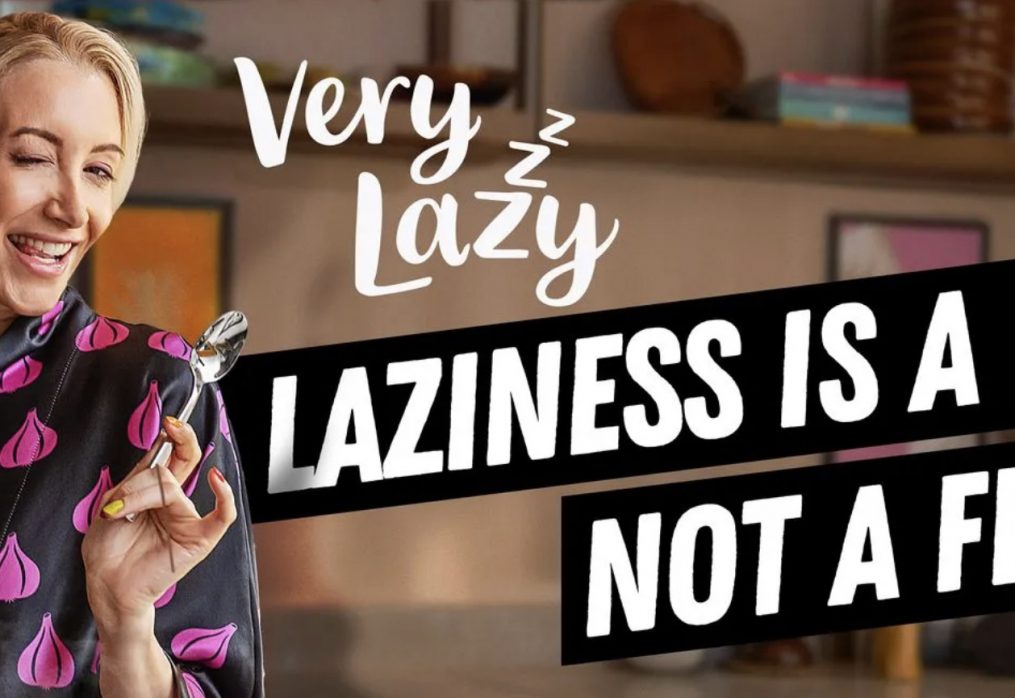
Very Lazy : Maximum Flavour. Minimum Fuss.
Concept by Finn Comms. Brought to life by Film Punks with directors Nott Brothers for Very Lazy.

The Brief

How do you embody, own, and empower lazy? Finn Comms and The English Provender Company asked us to take a proudly fuss free, humorous, flavour first mindset and bring it to screen with a bold new platform for Very Lazy. Enter Vera Lazenby, minimal effort, maximum impact.

The Idea

Vera lives by the spoon, embraces the busy, and stirs the shame out of shortcuts. The platform celebrates her lazy brilliance, proving that when you stop overcomplicating things, you unlock Maximum Flavour, Minimum Fuss. Working alongside Finn, we built Vera’s world, kitchen chic, warm humour, and character driven storytelling across TV, VoD, and digital.

The Campaign

From concept to Clearcast in just four weeks, twenty working days. Film Punks handled full production, with the Nott Brothers directing, delivering a broadcast spot and a toolkit ready for traditional and digital channels.

  • 1 × 30 second TVC
  • 1 × 10 second cutdown for social and digital
  • Photography toolkit for retail and digital touchpoints
  • Broadcast across Sky AdSmart, Channel 4 VoD, and targeted digital

The Work

Main TVC (30s)

Social Cutdown (10s)

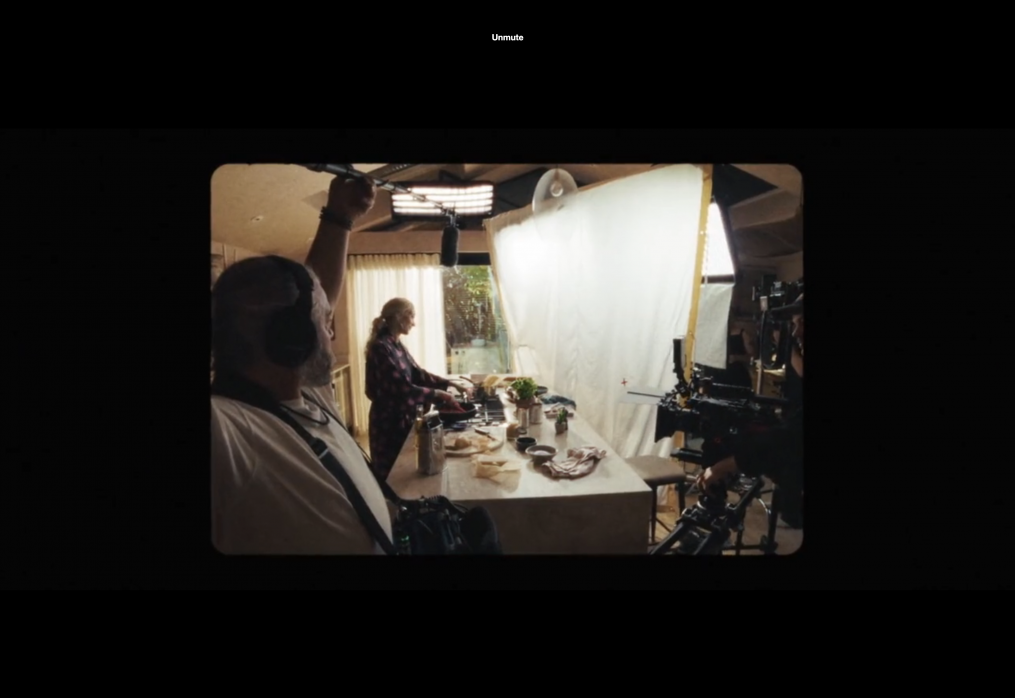
Behind The Scenes

Shot across a curated lazy luxe kitchen and lounge set, the production leaned into warmth, colour, and humour, proving that great food does not require hard work. From wardrobe and lighting to food styling, every detail celebrated the joy of effortless cooking.

Acknowledgments

Client : English Provender Company, Very Lazy

  • Innovation and Marketing DirectorKate Sayers
  • Marketing ManagerJulie Jackson
  • Brand ManagerMaariyah Raja
  • ChefSimon Whitby

Agency : Finn

  • ConceptFinn Comms
  • Creative DirectorChris Weston
  • Senior CreativesWill Heldt, Tom McConnell
  • Client Services DirectorKerrie Conway
  • Account DirectorLynsey Rose Kay

Production : Film Punks

  • DirectorsNott Brothers (Mark Danciger, Nathan Miller)
  • ProducersEd Balcombe, Jack Ashley, Madalena Prata
  • DOPCharles Mori
  • 1st ACArthur Attenborough
  • SoundChristian Curtis
  • PhotographerPaul Collins
  • GafferMatthew Bohan
  • LightingJames Brooker, Paolo Dalla Costa
  • Art DirectorNat Cook
  • WardrobeYohanna Yohnnes
  • Costume StylistAmy Thompson
  • Makeup ArtistNiki Henry
  • Food StylistsIsobel Macmillan Scott, Juliet Baptiste
  • CateringThe Honest Company
  • Colour GradeDominic Phipps, Company 3
  • VFXAlexander Bishop Frey
  • VoiceoverElaine Andrews
  • VO StudioSimon Wilkinson
  • CastingSandra Reynolds, Acclaim Artists
  • TalentNicci Brighten
  • Clearcast ConsultantPaul Friend
  • Kit HireEmmyland Ltd
  • Sky AdSmartGenevieve Touzin

My time at Film Punks

My time at Film Punks

I had a great time working with Film Punks and getting a real insight into what it’s like to have a job in the film industry. I really enjoyed learning how a film production company operates—how they plan, set up, and film their projects. I spent two days at the Film Punks office: the first day was focused on planning and preparing for a video shoot, and the second day was all about setting up equipment and filming a promotional video about the company itself.

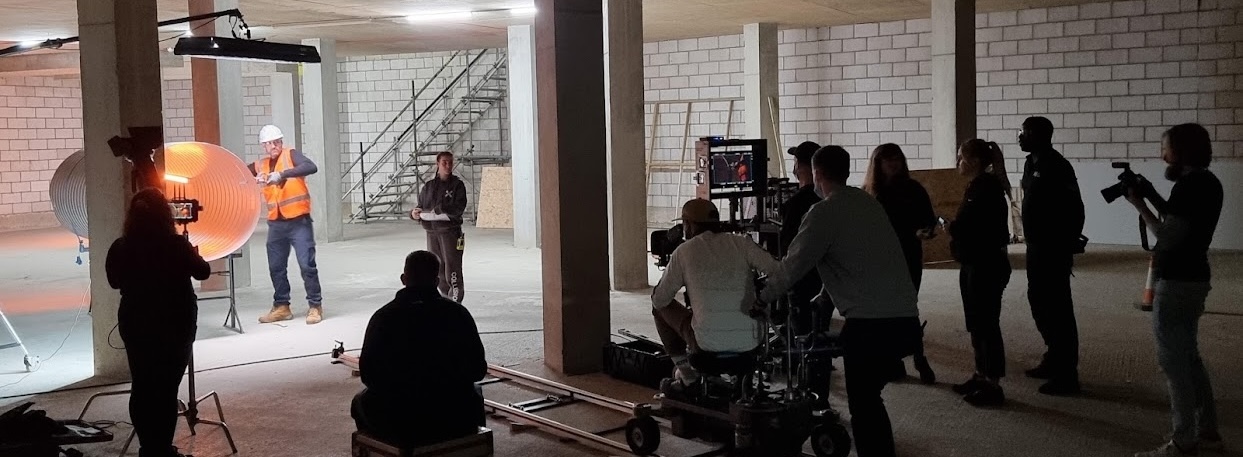
Setting up lights and stands
Setting up lights & stands for the shoot

On the shoot day, I helped transform the office into a proper filming environment. I worked with the team to move furniture and set up lighting stands to create the right look for the interviews. It was fascinating to see how precise the team was when positioning lights and diffusers to avoid harsh shadows and get the perfect shot.

“Learning how
to set up lights
was so interesting.”
Adjusting camera rig
Fine-tuning the camera rig

I also got to help with the camera rig. Watching how different lenses, angles, and setups changed the final shot gave me a real understanding of how much skill and planning goes into filming interviews that look professional and polished.

“I learned so much
about how a camera
setup shapes the story.”
Filming interview
Filming the team interviews

One of my favourite parts was watching the team conduct the actual interviews. I helped make sure the background was tidy, the lighting stayed consistent, and the sound was clear. It was amazing to see how much patience and teamwork goes into capturing a short clip that looks effortless on screen.

Checking shot details
Double-checking the shot details

Overall, the filming day taught me so much about lighting, camera work, and what it takes to produce an interview that looks polished and professional. The Film Punks team made me feel welcome and trusted me to pitch in with real tasks — which made it an experience I’ll never forget!

So You’ve Hired a Film Crew… Now What?

So, you’ve appointed a film production company to work on a TV ad, animation or brand film comes. How do you get the best out of the relationship? Here’s out top ten tips – navigating everything from clear communication, collaboration, and a shared vision.

1. Set Clear Objectives

Define what success looks like from the start. Whether it’s increasing awareness, driving sales, or telling a brand story—make sure the production team knows the “why” behind the project.

2. Share Your Brand DNA

Take time to give your production partner a deep understanding of your business and brand: history, tone, visual identity, target audience, values, and any existing brand assets. The more we understand your world, the more aligned the creative output will be.

3. Choose the Director and Team

Take time to work with your production partner to choose the right time — ask about their process, communication style, and experience in your industry. Chemistry matters just as much as capability.

4. Collaborate on the Creative Brief

A solid, co-written brief is everything. Involve the agency or production company early so they can help shape the creative from the start—not just execute your ideas, but build from them… these are creative people, let them bring their magic to your project.

5. Respect the Creative Process

Give space for the team to explore and pitch ideas and treatments. Avoid over-directing too early — great work often comes from creative freedom within a well-defined framework. Share your ideas, but keep an open mind.

6. Be Decisive and Consistent

Nothing derails a production like moving goalposts. Gather internal feedback early and consolidate it clearly before sharing with your production partner.

Avoid changing direction mid-way unless it’s critical. And if you have to, be aware that big changes bring in new costs – that’s why it better to get the detail locked down super early.

7. Plan for Pre-Production

Don’t rush this phase. Approving scripts, storyboards, voiceover artists, and music up front helps avoid costly changes later, and builds a more joined up end-product. The better the planning, the better the result.

8. Trust the Experts

You’ve hired them for a reason. If they advise on timing, technique, or storytelling—listen. They’ll be sharing their thoughts with the sole intention of making your work better!!! Animation and film are crafts with complex pipelines.

9. Think Long-Term, Not Just One-Off

Build a relationship, not just a one-off project. If they understand your brand deeply, the quality and consistency of future work only improves over time. Trusted relationships deliver increasing value over time.

10. Be Respectful of Budget and Timeline

If you push for cheaper or faster, know what trade-offs you’re making. Quality. Things can be done fast and to a high quality, but that usually costs more. Work with your production partner, set reasonable deadlines and requirements and you’ll usually be delighted with the outcome. Transparency goes both ways—ask what’s possible within your scope, and trust their recommendations.

Film Club: Issue 5

Film Club: What’s New on Screen?
2025 is already delivering some great big screen moments, and we’ve got our eyes on four major releases some nostalgic, some mind bending, and one potentially on the horizon. Let’s dive in.

Things we loved:

A bittersweet return that proves Bridget is still as charmingly chaotic as ever. The latest instalment follows her as a single mother navigating loss, love, and the ever changing dating  world. It doesn’t disappoint it’s funny and great to see the band back together!!

A Complete Unknown:

Timothée Chalamet channels Bob Dylan in a stylish, biopic that hits the right notes. James Mangold directs this dive into Dylan’s early years, featuring a stacked on-point cast and a killer soundtrack. We loved this one and we were griped all the way through.

One by us:

We teamed up with Roc Aperitivo to capture their premium drink in its natural habitat, Sun drenched Italian backdrops and effortless style. 🍸 Here’s a little slice of the action. 🎥 🤘 💥

Severance (Season 2):


Twists, tension, and existential dread back to Lumon for more mind bending brilliance. After that cliffhanger, we’re finally getting answers… or at least more questions. Either way, expect to be glued to your screen and taken on an emotional roller coaster!!!

CODA (Sequel Rumors?):

Not a new one but a new one to us. CODA tells the poignant story of Ruby, a seventeen-year-old who is the sole hearing member of a deaf family, living the dual life of a dedicated daughter and an aspiring singer. As she navigates her responsibilities as an interpreter for her parents and works on their struggling fishing boat, Ruby discovers her love for singing through her high school choir, guided by an encouraging choirmaster (Eugenio Derbez). This film is a deeply powerful and unforgettable watch, beautifully exploring themes of family loyalty and personal aspiration. It deftly balances the challenges Ruby faces between supporting her family and pursuing her dreams, ultimately delivering a heartfelt and feel good narrative that resonates.

That’s our pick of what’s making waves right now. What are you watching? Let us know!

How to Write a Killer Film Brief That Actually Helps

We’ve received briefs of all shapes and sizes over the last 12 years, working with brands directly and alongside agencies. No two are ever the same. Some are scribbled on the back of a cigarette packet, while others read like an entire brand encyclopedia. But the best ones strike a balance and are clear, informative, and to the point.

Here’s how to make yours work:

1. Start with the Basics

No one knows your brand better than you pretend im a 5 year old give me a short overview at the top what your business does, who your audience is. This helps everyone get aligned fast.

2. The Brief is a Starting Point, Not a Script

It doesn’t need to be fully formed, but it should have enough detail to avoid confusion. Think of it as the foundation for collaboration, not the final storyboard. What’s the one key message this film needs to communicate? Trying to fit in too much weakens the impact. Keep it focused.

3. Define the Goal

Are we driving sales, increasing brand awareness, or launching a new product? A clear objective makes for a stronger creative direction.

4. Know Your Audience

Who are we talking to? Be specific about age, interests, and pain points. The better we understand them, the more engaging the content will be.

5. Where Is It Going?

TV? Social? Website? Each platform has different requirements. A 60-second hero film might work for your homepage, but you’ll likely need cutdowns for Instagram, LinkedIn, or TikTok. Let’s plan for the right formats from the start.

6. Tone, Style & References

Should it be punchy and fun? Cinematic and emotive? Providing tone guidelines and reference videos gives us a head start in crafting the right visual language.

7. Budget & Timeline

This doesn’t mean locking everything down before we chat, but having a ballpark figure and deadline ensures expectations are realistic from day one.

8. Cutdowns & Supporting Content

Do you need shorter edits, teaser clips, or behind-the-scenes content? Thinking about this early makes sure we capture everything you need in one go.

9. What’s the Call to Action?

What do you want viewers to do after watching? Click a link? Buy a product? Follow your brand? The clearer the CTA, the better the results.

A strong brief doesn’t need to be long, it just needs to be clear. Get the essentials right, and the rest will flow.

Got an idea? Let’s make it happen.